
Posts by NRISG
How Japanese FMCG Can Build Fans in Asia
Summary: Japanese FMCG brands have built strong distribution and quality reputation across Southeast Asia. However, they are losing ground to Korean and local competitors who have invested in something harder to replicate, which is fan loyalty. Analysis of brand cases across Vietnam, Indonesia, and Singapore, supplemented by practitioner interviews, reveals (more…)
Read MoreGreen Jobs and the Just Transition: Why HR Must Lead the Next Transformation
Across industries, sustainability is no longer just a regulatory or branding consideration—it is becoming a fundamental business transformation. Global institutions such as the International Labour Organization estimate that the transition toward greener economies could generate 24 million new jobs worldwide by 2030, while reshaping the skills required across almost every sector. (more…)
Read MorePrevent “Performance Punishment” – a Retention Risk for Strong Performers
High-performing, high-potential (HiPo) employees are among an organization’s most valuable assets. They consistently deliver strong results today while also demonstrating the ability, aspiration, and agility to take on broader leadership responsibilities in the future. Because of their reliability and competence, leaders often entrust them with additional projects and critical assignments. (more…)
Read MoreQ1 2026 Economic Update
The gradual economic recovery hoped for may take longer than expected. After posting 4.4% growth in 2025, its slowest post-pandemic, prospects of an economic rebound hit a snag. Analysts now forecast growth for 2026 to be around the low-to-mid 5% while the government has trimmed its target to 5-6%, lower (more…)
Read MoreBusiness Ethics and Decision Quality: Strengthening Leadership Judgment in Complex Environments
Leaders are required to make decisions in environments characterized by speed, ambiguity, competing stakeholder interests, and reputational exposure. In such conditions, the central challenge is not simply making fast or profitable decisions. It is making decisions that are right — legally sound, values-aligned, and sustainable over time. Business ethics may (more…)
Read MoreNRI Manila Outlook Report 2026: Economic Resilience and Sustainability
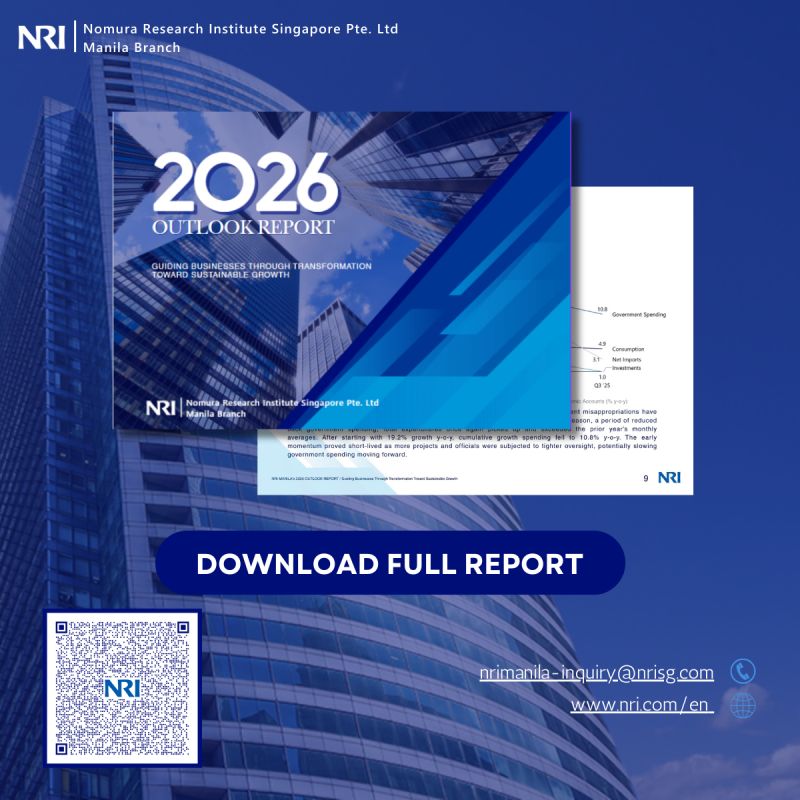
The 2026 𝐍𝐑𝐈 𝐌𝐚𝐧𝐢𝐥𝐚 𝐎𝐮𝐭𝐥𝐨𝐨𝐤 𝐑𝐞𝐩𝐨𝐫𝐭 is now live—bringing together forward-looking perspectives from NRI experts across industries to help leaders navigate what lies ahead for the Philippines. As the country enters 2026, the economy stands at a critical juncture. Growth softened in 2025 amid global headwinds and domestic challenges, even (more…)
Read MorePart 2: The Structure of the FMCG Market
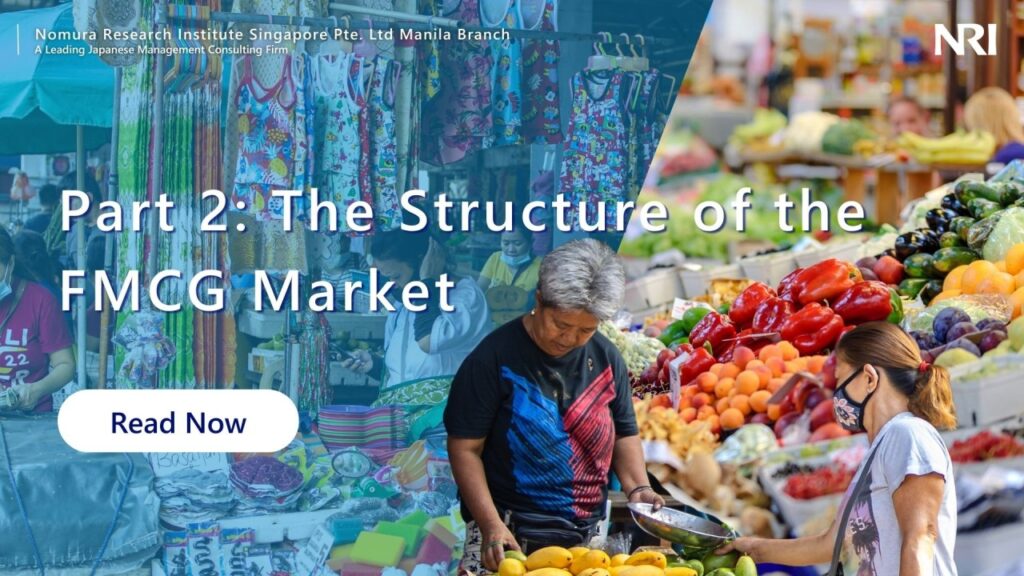
In the previous article, “An Overview of the Philippine Consumer Market,” we highlighted the expansion of the middle class and explained that consumption growth is not only quantitative but also qualitative—reflecting changes in where and how consumers make purchases. In this second installment, we focus on the fast-moving consumer goods (more…)
Read MoreEmotional Regulation: The Quiet Capability Defining Tomorrow’s Leaders
They say it’s not what you know, but who you know. Increasingly, however, who you know may no longer be enough— at the end, it’s who you are as a leader. In moments of pressure, uncertainty, and conflict, how you carry yourself speaks louder than any credential or connection. People may (more…)
Read MoreTax Audit Reforms to Ease Doing Business in the Philippines
Taxes have always been an important consideration for businesses intending to invest in a market and for businesses already operating in the market. The Philippine government recognizes this and has recently been working on reforms in the tax audit system to regain public trust and investor confidence. Last November 2025, (more…)
Read MoreAre Filipinos Truly Going Cashless?

Along with traditional business disruptions and rise of eCommerce demand, the pandemic also affected the use of traditional cash as opportunities and incentives to withdraw cash were reduced due to lockdowns. This led to a noticeable slowdown in the growth of cash withdrawals, and in some periods, even a temporary (more…)
Read More